How low-stakes practice can unlock your true stage presence
Overcoming Stage Fright Through Low-Stakes Practice
Hate public speaking? Then you can probably relate: I still remember my first fully impromptu speech. No preparation, no notes, no idea what the topic was going to be. Just a room full of people looking at me to open and close my mouth, a dry throat, a racing heartbeat, and no idea what to say.
Ok. The room just turned quiet. Everybody is looking at you, waiting to start. Just say something!
I did that several times, making a fool of myself and talking about anything and everything without any regard for the content of my speech. Simply to get used to what was happening on the outside and the inside. How does my body feel? Does anybody actually care what exactly I say?
Confidence Comes First
Two years later, and after having given hundreds of speaking workshops and worked with hundreds of people, I can draw one conclusion:
If you want to become a better public speaker but have terrible stage fright, the only way to implement all the cool stuff like storytelling, captivating pauses, on-point gestures, body language, and tonality is through building confidence first.
If you don’t build up your confidence with 20, 30, 100 pairs of eyes on you first, you won’t be able to actually apply all of the above in the key clutch moments.
Unfortunately, the only way to build confidence is through what I call “collect distinct experiences.”
What that means is to speak in as many situations as possible with as little preparation as possible.
That way, you train your brain to recognize and learn that:
- You won’t die.
- You’re able to speak in any situation.
- You’re able to speak in any emotional state — when you feel like it, when you don’t, when you’re afraid, when you’re depressed, when you’re full of energy, and so on.
Confidence is how we sound and how we appear.
It’s not about WHAT you say. It’s all about HOW you say it.
I recommend giving as many low-stakes, short, nonsense speeches as possible in an (important!) encouraging environment.
Ultraspeaking or Toastmasters Table Topics are fantastic places to start.
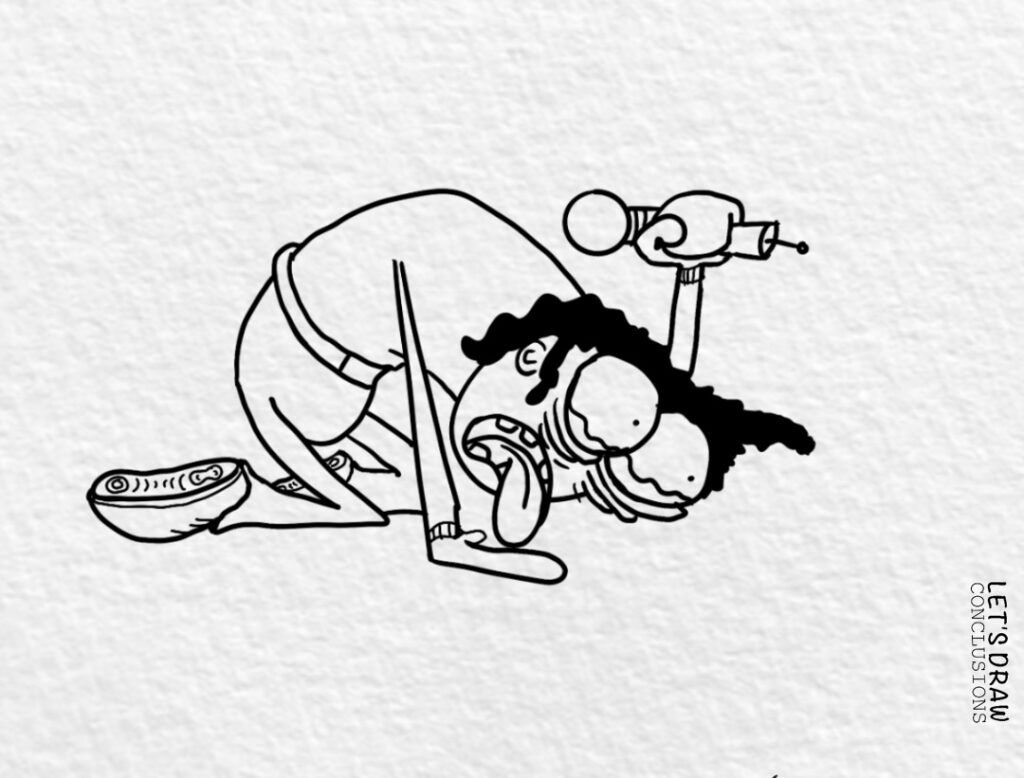
Practicing “Speak Before You Think”
I now practice the same approach to “speak before you think” on a weekly basis with different groups of people, and I can always see them evolve after 5–10 rounds of nonsense speeches.
They start focusing less on themselves and their thoughts and pulling off the perfect speech, and more on being themselves and the moment. Overcoming their fear by going right through it has freed up mental capacities to be more spontaneous and courageous in the moment.
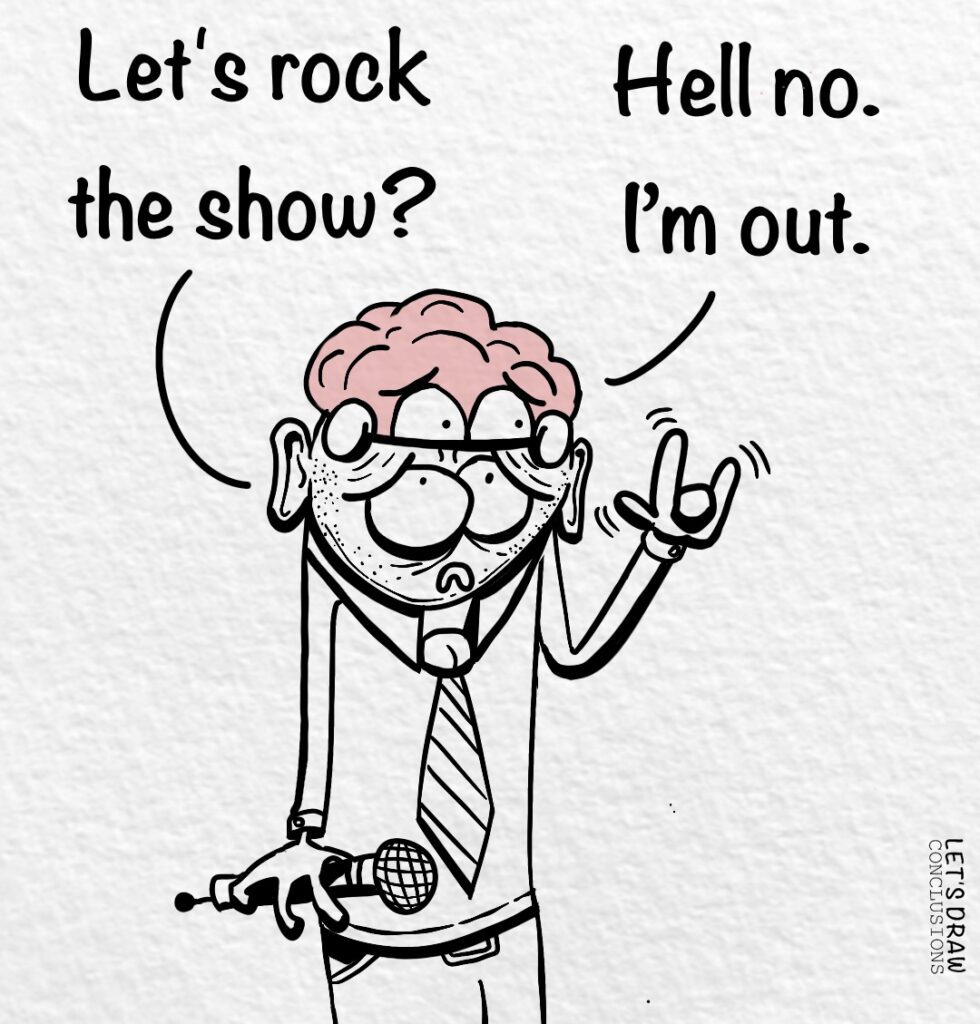
Moving to the Next Step
Only when you manage to appear confident should you move to the next step.
As Matt Abrahams writes in his book Think Faster, Talk Smarter:
“Managing anxiety frees up resources to behave more naturally, turn away from self-focus, become bolder, nimbler, tune in to audience needs, and overall become a more compelling speaker.”
Your Next Challenge
What could be a situation where you could practice low-stakes, impromptu nonsense speeches next week? Maybe with a small group of understanding colleagues or friends?
If your brain still says, “No way! I can’t do that!” — close this tab, start looking for a Toastmasters club or Ultraspeaking practice group, and start giving those speeches, working on how you sound, how you look, and how you feel while talking complete nonsense.
If you master looking confident in those situations, you’ll soon be ready for more high-stakes speeches and environments!
You’re reading Let’s Draw Conclusions. Subscribe below to catch new posts and join the conversation. You may also visit on Substack!