Most people prepare weeks for long speeches, then freeze on stage. Here’s the only fundamental skill that prevents that and how to practice it safely.
Most people coming to public speaking training want to give polished, lengthy speeches. They prepare for weeks, memorize jokes, plan pauses, and dream of a TED-style performance.
The problem? They skip the first fundamental skill, so when it’s showtime, their brain goes into fight-or-flight mode: shaky voice, frozen gestures, forgotten jokes. Storytelling, humor, and pauses – all vanish.
Here’s the uncomfortable – but only – way known to humanity to beat it.
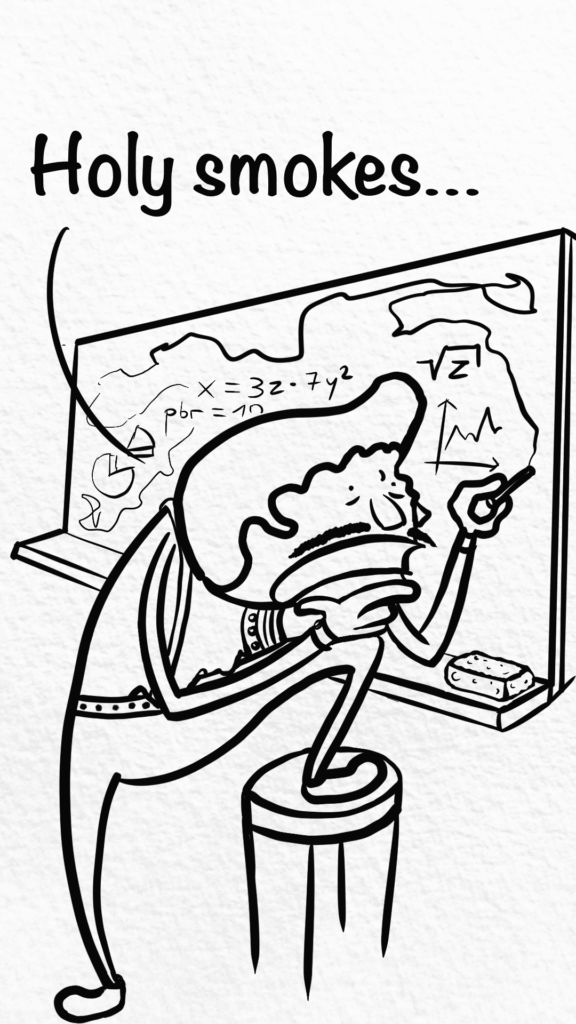
Collecting Distinct Experiences
I call it collecting distinct experiences. The idea is simple: speak in as many different situations as possible, even short, silly, low-stakes talks. Minimal prep is fine. The more you practice on different days, with different people, and in various emotional states, the more your brain learns: you can handle fear anywhere. Slowly, fear starts to feel like excitement.
Practical mini-challenge: start giving 1-minute speeches on the topic “How I am today”in a friendly, encouraging environment.
Speak everywhere – short, silly, zero-prep talks. Like gym reps for your mouth.
Should you try this at work? No. Low- stakes speeches must be held in supportive environments. If you can’t speak comfortably in front of three friends, you won’t manage it in front of your boss.
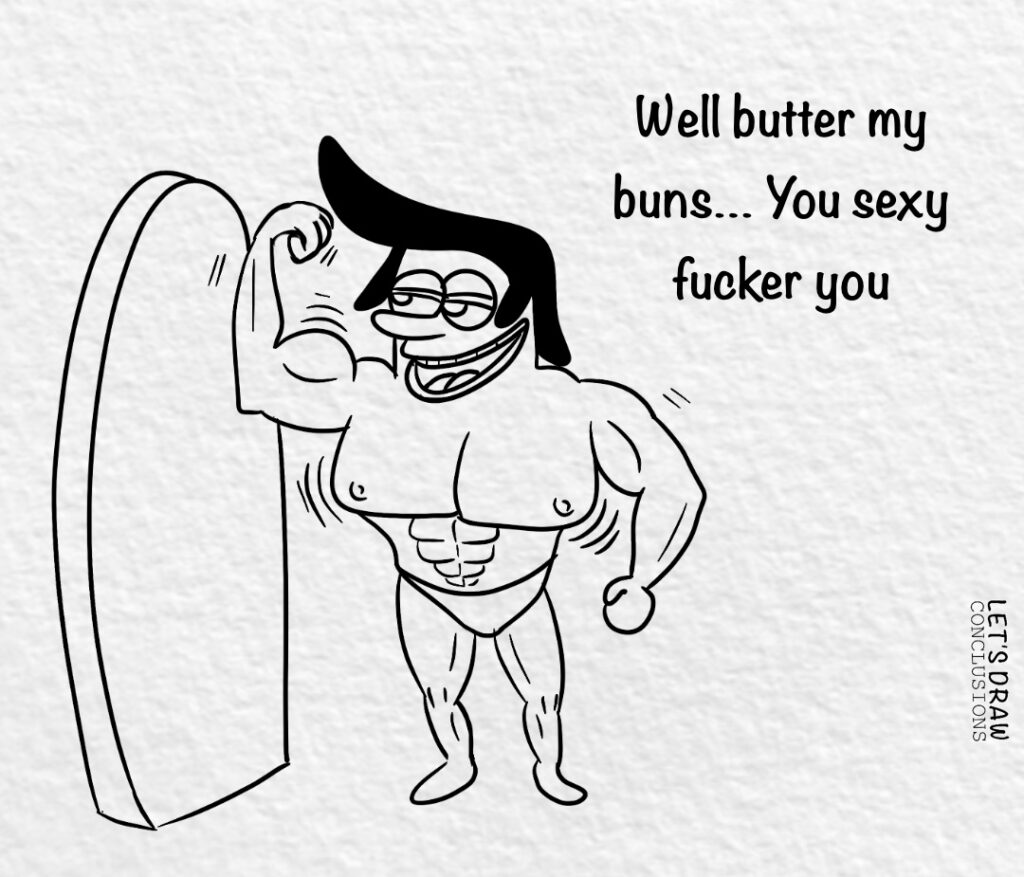
Confidence is How You Appear
Every new speaking experience builds confidence. The goal isn’t perfection – it’s proof: you can survive, adapt, and grow.
The more experiences you collect – in different emotional states and settings – the lower the pressure in any single situation. Confidence is about how you sound and how you appear, not what you say.
Low-Stakes Practice Recommendations
- Give as many short, low-stakes, sometimes nonsensical speeches as possible.
- Ultraspeaking sessions or Toastmasters Table Topics are excellent starting points.
Only after you can appear confident should you move to higher stakes. As Matt Abrahams writes in Think Faster, Talk Smarter, managing anxiety frees mental resources to:
- Behave more naturally
- Shift focus away from yourself
- Become bolder and nimbler
- Tune into audience needs
- Become a more compelling speaker overall
Every mini-speech is like lifting weights for your confidence muscles – small reps build a strong foundation.
Your Next Step
Close this tab, find a Toastmasters club or Ultraspeaking group, and start giving speeches. Focus on how you sound, how you look, and how you feel, even if the content is nonsense.
Master appearing confident in these situations, and higher-stakes speeches will soon feel manageable.
Happy practicing – keep honing your speaking skills!
Thank you for reading Let’s Draw Conclusions – short reflections and sketches on communication, creativity, and self-development. Leave a comment, join the conversation, and let’s draw conclusions together :D!
Thank you for reading Let’s Draw Conclusions. Subscribe below to catch new posts. Thank you for your support!